KNOW YOUR NUMBERS
Understanding Your Bloodwork: What Do Your Lab Results Actually Mean?
A plain-English guide to biomarkers, reference ranges, and the questions worth asking about your results.
At a Glance
A lab report can be full of numbers, abbreviations, and colored flags that are difficult to interpret. Learn what biomarkers and reference ranges mean, why a flagged result is not automatically a diagnosis, and how to talk with your healthcare provider about common blood tests.
Key Takeaways
- A biomarker is a measurement, such as glucose or cholesterol, that offers information about a specific aspect of health.
- A result outside the laboratory reference range does not automatically mean disease; a result inside the range does not guarantee health.
- Medications, fasting, timing, illness, and differences between laboratories can affect results.
- Trends can matter, but comparisons are most useful when the test, units, and laboratory methods are comparable.
- A licensed healthcare professional can help decide which findings need follow-up and whether more testing would be useful.
1. What is a biomarker?
A biomarker is something measurable that gives information about a body process. In bloodwork, familiar examples include glucose, cholesterol, blood cell counts, and certain proteins or hormones. A biomarker is a clue, not a complete story about your health.
Different tests answer different questions. For example, a glucose result reflects blood sugar near the time of collection, while hemoglobin A1c reflects an average over roughly the preceding two to three months. Your provider helps determine which tests are appropriate.
2. Understanding the parts of a lab report
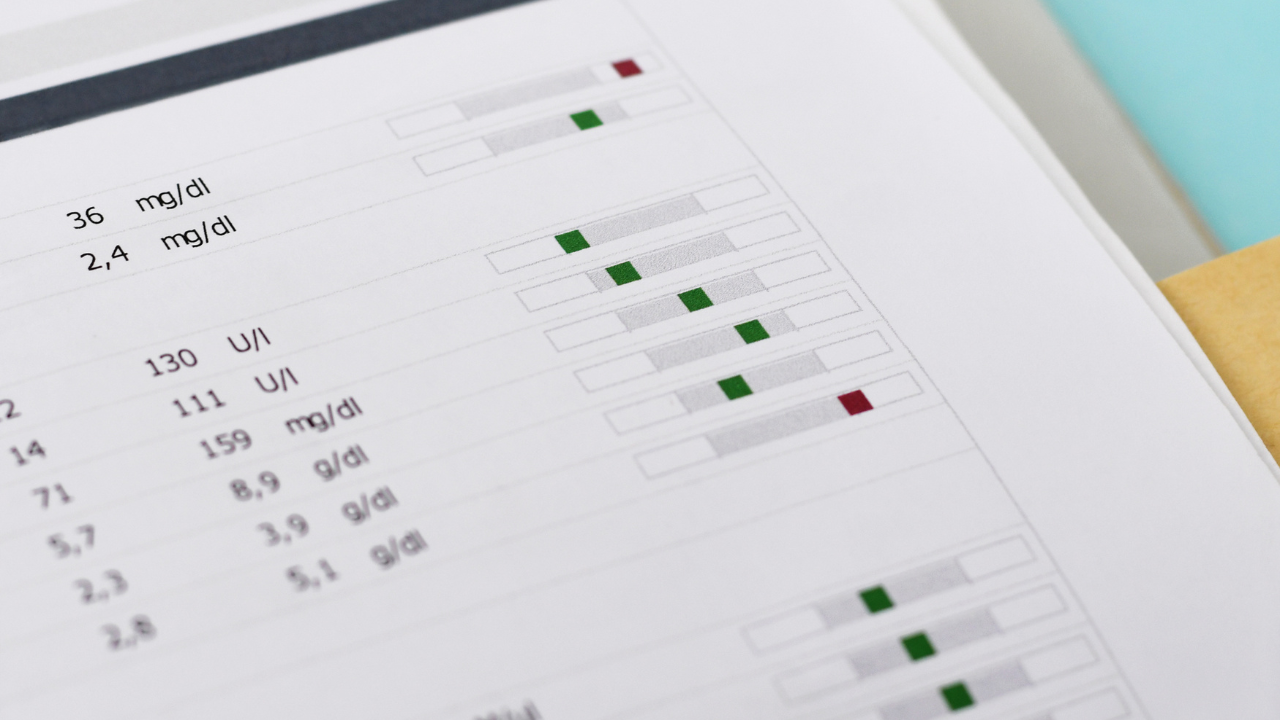
Most reports list the test name, your result, the units used, and the testing laboratory’s reference range. Some flag measurements above or below that range.
Pay attention to units. A number measured in one unit may not have the same meaning when expressed in another. Compare reports only after checking the test name, units, and relevant laboratory methods.
3. What does a reference range really mean?
A reference range is developed from results in a selected comparison population. It is not a universal line between healthy and unhealthy. Ranges may differ between tests, laboratories, and patient groups.
Healthy people sometimes have a value outside the stated range. People with symptoms may have results inside it. A clinician considers the reason for testing, symptoms, medical history, and other findings.
Use the range printed by the laboratory that performed the test rather than applying a generic chart found online.
4. Common bloodwork categories explained
Blood sugar and metabolism: Glucose is a snapshot of blood sugar; A1c represents a longer-term average. Insulin helps the body use glucose, but a single insulin result needs clinical context.
Heart and cholesterol: Lipid panels measure cholesterol and triglycerides. Some expanded panels include apolipoprotein B (ApoB), related to cholesterol-carrying particles, or hs-CRP, a nonspecific inflammation marker. No single value describes total cardiovascular risk.
Blood cells: A complete blood count (CBC) reports red cells, white cells, platelets, and related measurements. Patterns can guide further discussion with a clinician.
Liver, kidneys, and electrolytes: A comprehensive metabolic panel (CMP) includes markers such as creatinine, liver-associated enzymes, sodium, and potassium.
Thyroid, hormones, and nutrients: TSH, testosterone, ferritin, and vitamin D measure different things. Whether testing is useful depends on the question being asked.
5. Why results can change
What you ate or drank, time of day, physical activity, hydration, temporary illness, medications, supplements, and ordinary biological variation may affect results. Tests may also differ by laboratory method.
Follow the preparation instructions attached to your specific order. Do not stop prescribed medications unless your treating clinician instructs you to do so.
6. Trends and follow-up: when does a change matter?
A series of comparable results can provide more context than one value, but small changes may reflect normal variation. Differences between laboratory methods or units can make direct comparison misleading.
Ask what the result changes about your next step. Depending on the finding and clinical context, a provider might recommend monitoring, repeating a test, considering another test, or no immediate action. More testing is not automatically better.
7. Turn numbers into a useful conversation
You do not need to decode every abbreviation alone. Bring your questions, symptoms, medication list, and prior comparable results to your appointment. Ask which results matter most and why.
Blood testing does not substitute for a clinical examination, medical history, or recommended preventive screening. The goal is to understand which findings are relevant to your health and what, if anything, to do next.
Prepare for Your Visit
Questions to Ask Your Provider
- What question was this test meant to answer?
- Which results matter most given my symptoms and history?
- Does a flagged result need follow-up, or could it reflect ordinary variation?
- Could fasting, medications, supplements, or timing have affected the measurement?
- Would repeating a measurement help, and if so when?
- Are there recommended screenings or evaluations more useful than adding more biomarkers?
Helpful Answers
Frequently Asked Questions
Does a high or low value mean I have a disease?
Not necessarily. Reference ranges are guides, not diagnoses. A clinician interprets your result with your history, symptoms, and other information.
Why is a result flagged if I feel fine?
A flag means it falls outside the laboratory reference range. Some healthy people have flagged results, so ask your provider how important the difference is.
Can normal bloodwork rule out all health problems?
No. Normal results cannot exclude every condition. Symptoms and other findings may still call for evaluation.
Do I have to fast before every blood test?
No. Fasting depends on the test and the laboratory order. Follow the instructions from your care team.
Can I compare this year’s numbers with last year’s?
Often, but first check that the measurements, units, and laboratory methods are comparable.
Should everyone get a broad blood panel?
No. The right testing depends on individual circumstances and the clinical question, not on collecting as many measurements as possible.
Next Step
Know Your Numbers. Understand Your Health.
Explore Pinnacle’s Labs & Health Insights options and speak with a licensed provider about which tests, if any, fit your questions and medical history.
Explore Labs & Health InsightsReferences
Sources
- How to Understand Your Lab Results — National Library of Medicine — MedlinePlus View source
- Laboratory Tests — National Library of Medicine — MedlinePlus View source
- Complete Blood Count (CBC) — National Library of Medicine — MedlinePlus View source
- Comprehensive Metabolic Panel (CMP) — National Library of Medicine — MedlinePlus View source
- Hemoglobin A1C (HbA1c) Test — National Library of Medicine — MedlinePlus View source
- Cholesterol Levels — National Library of Medicine — MedlinePlus View source